Legal and financial affairs
Start with Chapter 1 — conversations, POA, wills, and the cemetery details families forget.
Practical Caregiving, Personal Stories, and Finding Peace on the Journey
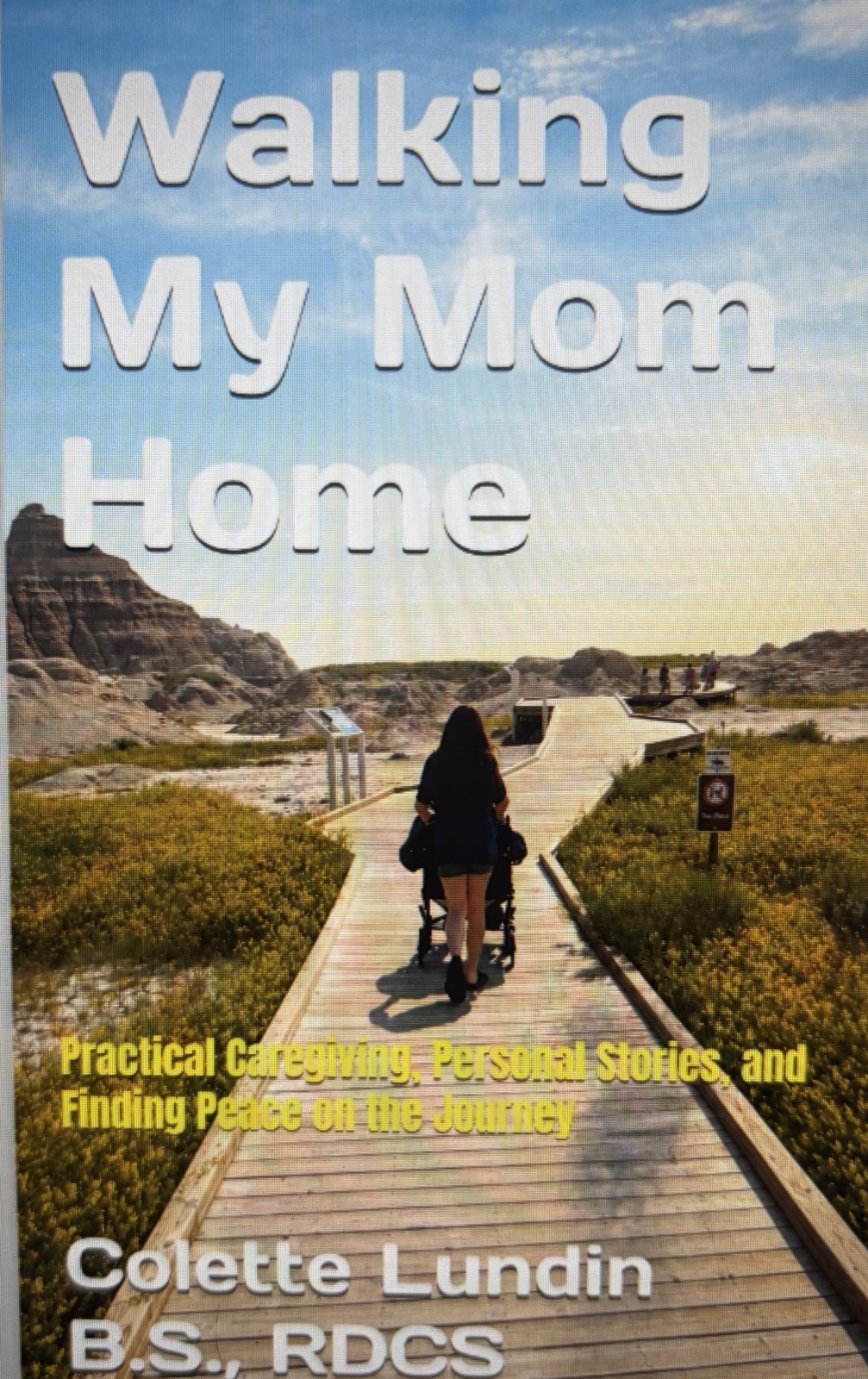
About the book
This is not a dry medical textbook, nor a rigid manual of unrealistic demands. It is an honest, compassionate companion written from the trenches of caregiving.
After her mom’s traumatic brain injury and progressive cognitive decline, Colette Lundin stood in two roles at once: healthcare professional and daughter. She wrote the book she needed — checklists you can take to a hospice interview, and language for the days you feel you are failing.
Caregiving is messy, unpredictable, and physically demanding. You will make mistakes. That does not mean you are failing. It means you are deeply human.
How to use this book
Start with Chapter 1 — conversations, POA, wills, and the cemetery details families forget.
Turn to Chapter 2 when the rules of the brain have changed overnight.
Chapter 3 is for plants, recliners, elastic-waist pants, and the outing backpack.
Chapters 5 and 6 include the exact questions to take with you.
Toolkits inside
Durable financial POA, healthcare proxy, last will, living will, and the funeral costs that sit on top of a cemetery plot.
Briefs, wipes, a spare outfit, a spill-proof cup, a coloring pad, and an emergency card — packed by the door.
Twenty-five questions on eligibility, staffing, 24/7 response, and what hospice does not do so families are not surprised.
When relatives offer opinions: Is this about her welfare? Is it backed by daily facts? Will this person help carry the work?
Excerpt
If you are holding this book, chances are your world has shifted in ways you never anticipated.
Perhaps a parent recently received a diagnosis of dementia, or a sudden medical crisis turned your family’s routine upside down overnight. Maybe you are standing in the middle of a hospital corridor feeling completely overwhelmed by terms like Power of Attorney, FAST Scale, or Hospice, wondering how on earth you are going to navigate the road ahead.
I want you to take a deep breath and hear me when I say this: you do not have to have everything figured out today, and you are not alone.
When my mom suffered a traumatic brain injury that gradually transitioned into progressive cognitive decline, my life changed forever. In my professional life as a healthcare worker, I had spent years observing clinical care plans, watching medical teams in action, and understanding the logistics of patient care.
Yet, when it was my own mother sitting across from me — the woman who had raised me, the strong matriarch of our family — all the clinical training in the world couldn’t shield my heart from the raw, emotional weight of being her daughter.
Walking a parent home through cognitive decline is one of the heaviest burdens you will ever carry, but it is also one of the greatest acts of love and honor you will ever offer.
My hope for you as you read these pages is that you find practical answers to ease your daily load, permission to release caregiver guilt, and the quiet reassurance that your presence, your advocacy, and your love are more than enough.
Let’s take this journey one step, one breath, and one day at a time.
With warmth and gratitude, — Colette